CONNSECT
Invest
Main Land
Open Company in Oman
Oman free zones
Salalah Free ZoneSohar Free ZoneDuqm Special Economic ZoneAl-Mazunah Free Zone
LiveConsultationMagOman News
ENARFA
Free consultation
CONNSECT
Invest+
Main Land+
Open Company in Oman
Oman free zones+Oman free zones
Salalah Free ZoneSohar Free ZoneDuqm Special Economic ZoneAl-Mazunah Free Zone
LiveConsultationMagOman News
ENARFA
Free consultation
Connsect

Connsect is the direct route into Oman: company formation, residency, property, banking and legal support, handled end to end from our own offices in Muscat and Tehran.

Registered with the Oman Ministry of Commerce, Industry and Investment Promotion

Services

Company Registration in OmanResidency & Golden Visa

Company

About ConnsectOman MagazineContact UsFAQ

Contact

EmailMuscat office: +968 7195 7800Tehran office: +98 21 9103 0530

Sunday–Thursday 10:00–16:00 · Saturday 10:00–14:00 · Friday closed

Our offices

Muscat office

Al Ghubra, Muscat — opposite Oman Mall, Al Ghailani Tower, Floor 6, Office 602

Directions:Google Maps

Tehran office

Shahrak-e Gharb, Tehran — Phase 6, West Ivanak, North Golafshan, 1st Street, Iranian Complex, No. 1, Unit 3

Directions:Google MapsNeshanBalad

Licences and trust marks

eNamad trust sealOfficial Oman company formation licence
CR No.1428477Verify on the Oman Ministry of Commerce portal
© 2026 Connsect — All rights reserved.
PrivacyTerms
Call an advisorFree consultation
Call us directlyWhatsAppOur office on the mapContact page

The amazing history of Omani money

Published: July 15, 2024Last reviewed: July 23, 2026
Author: alireza4 min read
Collecting coins was once considered the hobby of kings, but over time this hobby has spread among common people worldwide. Those who collect or study old coins or bills are known as numismatists. Numismatics is the study of coins and related units, and it is one of the oldest hobbies in the world. The History of Numismatics One of the most famous numismatists in history was Emperor Caesar Augustus, born in 63 BC. He had a keen interest in collecting coins from around the world that were in circulation during his era. He often gifted these coins to other rulers to facilitate trade. Numismatics in Oman In the Sultanate of Oman, there are many individuals interested in collecting old coins. One such individual is Syed Shaandar Ali Shah Bukhari, a long-time resident of Oman. Bukhari started collecting posters from magazines, stickers from Suntop tetra packs, and an old coin gifted by his late father, Syedzada Sakhawat Ali Shah Bukhari, from a very young age. "My father saw an interest in antiques in me and would gift me items from time to time, including an old oil lamp from over 50 years ago when he first landed in Oman," said Shaandar. Personal Collection and Historical Significance Shaandar still treasures this oil lamp as a prized possession, reminding him of their humble beginnings. He also possesses an antique timepiece from the early 1900s, memorabilia from his grandfather's participation in WWII, and the first edition of the Oman Arabic newspaper from 1972. "Looking at these precious items is like a trip down memory lane," Shaandar says. Highlights of Bukhari’s Collection Dirham from the Umayyad Era – 784 years old: Oman had the distinction of possessing the oldest Islamic coin mint in the Arabian Peninsula. These coins were used in coastal regions, especially around Sohar, and were minted in Damascus (modern-day Syria) from 40–129 AH/661–746 CE (Umayyad Caliphate). Maria Theresia Thaler – 244 years old: Also known as Thaler, this coin was mainly used for international trade due to its widespread recognition. It has been minted since 1741, with the commonly found ones dating back to 1780. Rial Coin – 147 years old: Issued by Sultan Barghash bin Said al-Busaidi and minted in Brussels, Kingdom of Belgium, this coin was made of silver in 1299 AH/1881 CE. It was used in Zanzibar, which was part of Oman since 1698. ¼ Anna – 130 years old: The 1/4 Anna coin held immense significance in Oman’s political and financial history. It dates back to 1898, minted in Muscat during the reign of Sultan Faisal bin Turki, Sultan of Muscat and Oman from 1888 to 1913. Half-Rial Saidi – 78 years old: This half-rial coin was in use during the era of Sultan Said bin Taimour, from the time it was the Sultanate of Saidia and Sultan of Muscat and Oman. Rial Saidi – 67 years old: This 1 rial coin was in use during the era of Sultan Said bin Taimour, from the time it was the Sultanate of Muscat and Oman. The amazing history of Omani money Banknotes 100 Baisa Bill: This bill was in use during the era of Sultan Said bin Taimour, from the time it was the Sultanate of Muscat and Oman. This was before the formation of the Central Bank and was signed by C J Pelly, the then Secretary for Financial Affairs of the Oman Currency Authority. Half Rial Bill – Approximately over 50 years old: This bill was among the first in use during the era of the late His Majesty Sultan Qaboos. It was signed by Mahmood Mohammad Murad, the Chairman of the Oman Currency Board. Hundred Baisa Bill – 48 years old: This bill was among the first in use during the era of the late His Majesty Sultan Qaboos, from the time when he took over. This was used after the formation of the Central Bank and was signed by Tariq bin Taimour, the Chairman of the Central Bank of Oman. Hundred Baisa Bill – 48 years old: This bill was from the era of the late His Majesty Sultan Qaboos and was personally signed by him. Five-Rial Bill – Currently in use: This bill is currently in use and is from the era of His Majesty Sultan Haitham bin Tarik. It is signed by HH Sayyid Taimour bin Asaad al Said, Chairman of the Board of Governors of the Central Bank of Oman. Conclusion The amazing history of Omani money

Collecting coins was once considered the hobby of kings, but over time this hobby has spread among common people worldwide. Those who collect or study old coins or bills are known as numismatists. Numismatics is the study of coins and related units, and it is one of the oldest hobbies in the world.

The History of Numismatics

One of the most famous numismatists in history was Emperor Caesar Augustus, born in 63 BC. He had a keen interest in collecting coins from around the world that were in circulation during his era. He often gifted these coins to other rulers to facilitate trade.

Numismatics in Oman

In the Sultanate of Oman, there are many individuals interested in collecting old coins. One such individual is Syed Shaandar Ali Shah Bukhari, a long-time resident of Oman. Bukhari started collecting posters from magazines, stickers from Suntop tetra packs, and an old coin gifted by his late father, Syedzada Sakhawat Ali Shah Bukhari, from a very young age.

"My father saw an interest in antiques in me and would gift me items from time to time, including an old oil lamp from over 50 years ago when he first landed in Oman," said Shaandar.

Personal Collection and Historical Significance

Shaandar still treasures this oil lamp as a prized possession, reminding him of their humble beginnings. He also possesses an antique timepiece from the early 1900s, memorabilia from his grandfather's participation in WWII, and the first edition of the Oman Arabic newspaper from 1972.

"Looking at these precious items is like a trip down memory lane," Shaandar says.

Highlights of Bukhari’s Collection

  • Dirham from the Umayyad Era – 784 years old: Oman had the distinction of possessing the oldest Islamic coin mint in the Arabian Peninsula. These coins were used in coastal regions, especially around Sohar, and were minted in Damascus (modern-day Syria) from 40–129 AH/661–746 CE (Umayyad Caliphate).
  • Maria Theresia Thaler – 244 years old: Also known as Thaler, this coin was mainly used for international trade due to its widespread recognition. It has been minted since 1741, with the commonly found ones dating back to 1780.
  • Rial Coin – 147 years old: Issued by Sultan Barghash bin Said al-Busaidi and minted in Brussels, Kingdom of Belgium, this coin was made of silver in 1299 AH/1881 CE. It was used in Zanzibar, which was part of Oman since 1698.
Share
واتساپتلگرامXLinkedIn
a

About the author

alireza

من علیرضا هستم، علاقه‌مند به بازارهای مالی و فعال در نشر وب.

All articles by this authorFacebook
Limited-time offer

Major savings on company registration fees in Oman

A limited-time offer to register your company in Oman at the lowest cost — from consultation to trade license and bank account, on one clear, hassle-free path.

Learn more

Free case evaluation

We'll review your case, free

Tell us what you need in three short steps. One of our advisors reviews your case and comes back with an assessment, a cost estimate and a timeline.

  1. 1Service
  2. 2Details
  3. 3Contact
Which service do you need?

Share your circumstances with an advisor for review.

Free case evaluation

Follow us

  • ¼ Anna – 130 years old: The 1/4 Anna coin held immense significance in Oman’s political and financial history. It dates back to 1898, minted in Muscat during the reign of Sultan Faisal bin Turki, Sultan of Muscat and Oman from 1888 to 1913.
  • Half-Rial Saidi – 78 years old: This half-rial coin was in use during the era of Sultan Said bin Taimour, from the time it was the Sultanate of Saidia and Sultan of Muscat and Oman.
  • Rial Saidi – 67 years old: This 1 rial coin was in use during the era of Sultan Said bin Taimour, from the time it was the Sultanate of Muscat and Oman.
  • The amazing history of Omani money
    The amazing history of Omani money

    History of banknotes in Oman

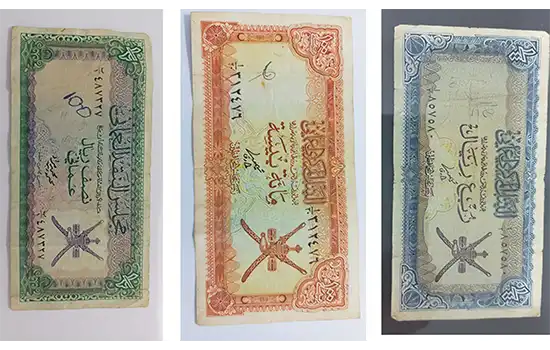
    • 100 Baisa Bill: This bill was in use during the era of Sultan Said bin Taimour, from the time it was the Sultanate of Muscat and Oman. This was before the formation of the Central Bank and was signed by C J Pelly, the then Secretary for Financial Affairs of the Oman Currency Authority.
    • Half Rial Bill – Approximately over 50 years old: This bill was among the first in use during the era of the late His Majesty Sultan Qaboos. It was signed by Mahmood Mohammad Murad, the Chairman of the Oman Currency Board.
    • Hundred Baisa Bill – 48 years old: This bill was among the first in use during the era of the late His Majesty Sultan Qaboos, from the time when he took over. This was used after the formation of the Central Bank and was signed by Tariq bin Taimour, the Chairman of the Central Bank of Oman.
    • Hundred Baisa Bill – 48 years old: This bill was from the era of the late His Majesty Sultan Qaboos and was personally signed by him.
    • Five-Rial Bill – Currently in use: This bill is currently in use and is from the era of His Majesty Sultan Haitham bin Tarik. It is signed by HH Sayyid Taimour bin Asaad al Said, Chairman of the Board of Governors of the Central Bank of Oman.

    Conclusion

    Numismatics is not just a hobby but a part of history and culture that allows us to revisit and learn from the past. Syed Shaandar Ali Shah Bukhari, with his valuable collection, is an example of enthusiasts in Oman who preserve a rich history of old coins and banknotes.

    Categories

    oman tourist

    Related articles

    You may also want to read these

    About OmanMarch 2, 2025Ramadan in Oman – Important Guidelines to Know!Read moreAbout OmanDecember 24, 2024Oman Crowned Most Affordable Tax-Free Country for Expats in 2024Read moreAbout OmanDecember 18, 2024Oman: A Global Model in Inflation ManagementRead moreAbout OmanNovember 25, 2024The Best Malls in Muscat: Shopping, Leisure and Unique ExperiencesRead moreAbout OmanNovember 11, 2024Participate in Oman Exhibitions 2025Read moreoman touristJuly 9, 2024A Glimpse into Oman’s Luxurious Arabic-Designed Event HallsRead more