

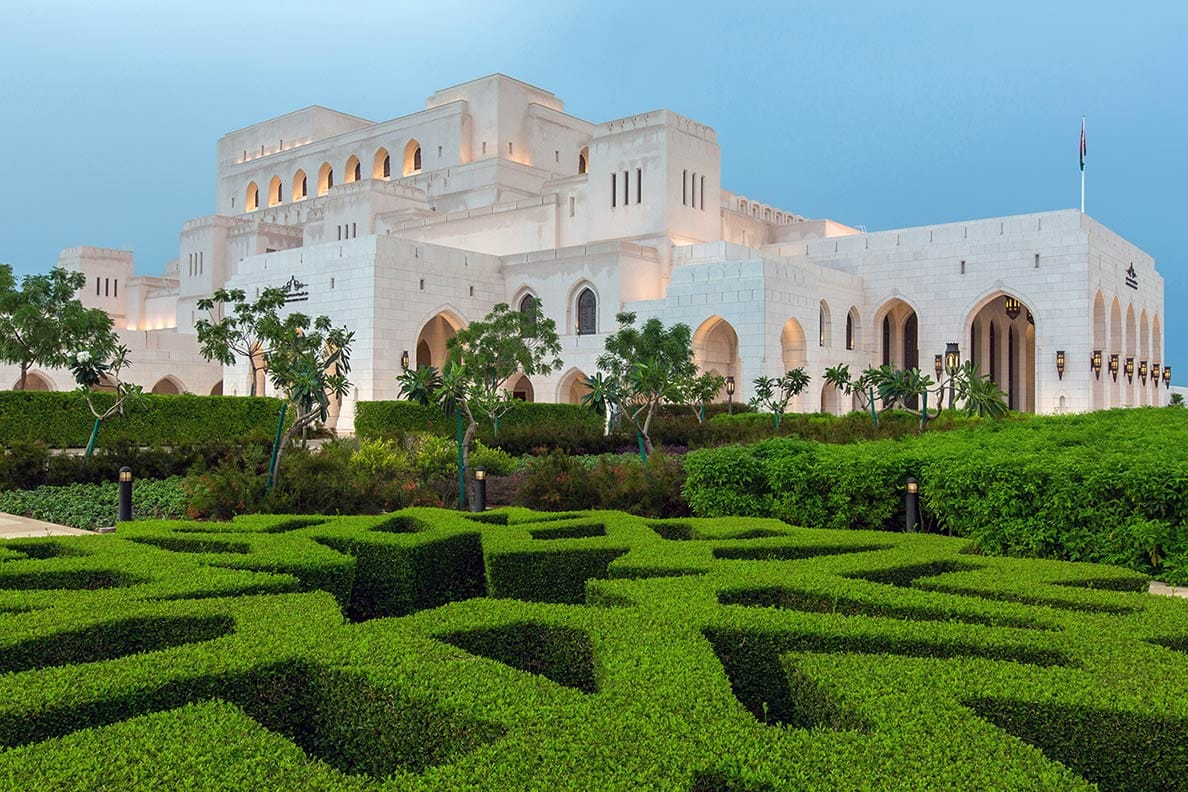
Oman occupies the southeastern corner of the Arabian Peninsula, where the Arabian Sea, Gulf of Oman and Persian Gulf meet the country's varied coastline. Its geography ranges from the Hajar Mountains and inland desert to coastal plains and the greener seasonal landscapes of Dhofar. Understanding these regional differences helps visitors choose destinations, plan journeys and prepare for local weather conditions.
Where is Oman located?
Oman lies in the Northern and Eastern Hemispheres. It shares land borders with the United Arab Emirates, Saudi Arabia and Yemen, while its coastline faces several important regional waterways. Muscat, the capital, is a major centre for government, services and economic activity.
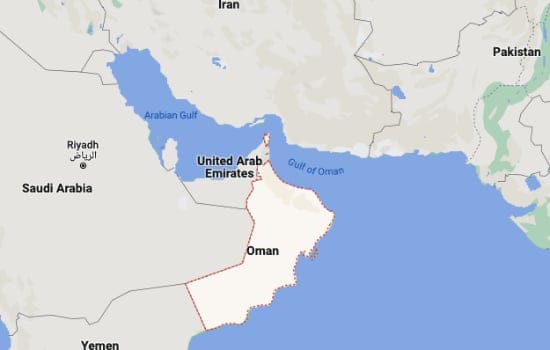
The country's territory includes two geographically distinctive areas associated with the United Arab Emirates. Musandam lies in the north near the Strait of Hormuz and is separated from the main part of Oman by Emirati territory. Madha is an Omani enclave within the United Arab Emirates.
For practical travel planning, distinguish between the country's northern peninsula, the central and northern mainland, and the southern governorate of Dhofar. Road distances between these areas can be substantial, so a route that looks short on a small regional map may require careful planning.
Oman's landscape and physical geography
Oman's terrain includes mountains, coastal plains, rocky valleys, dry interior areas and extensive desert environments. These landscapes influence settlement patterns, transport routes, vegetation and the kinds of outdoor activities available in different parts of the country.
The Hajar Mountains and inland areas
The Hajar range forms one of Oman's most distinctive natural features. Mountainous terrain creates local differences in elevation and conditions, while the interior includes arid areas where water availability strongly influences vegetation and settlement.
The coastline and Musandam
Oman's coastline borders the Gulf of Oman and the Arabian Sea, with the country's northern territory also associated with the Strait of Hormuz. Coastal conditions vary by location, making it important to check local sea conditions and access arrangements before planning boating, diving or other marine activities.
Dhofar in the south
Dhofar has a seasonal climate that distinguishes it from much of northern Oman. During the khareef season, moisture, mist and rainfall can transform the landscape around Salalah and nearby areas. Conditions vary from year to year, so visitors should check the forecast and road conditions before setting out.
Oman's governorates and administrative regions
Oman has 11 governorates. Their geographical differences matter when comparing destinations, planning journeys and understanding how the country is organised administratively. The official government overview provides a reference for the country's administrative regions and governorates.
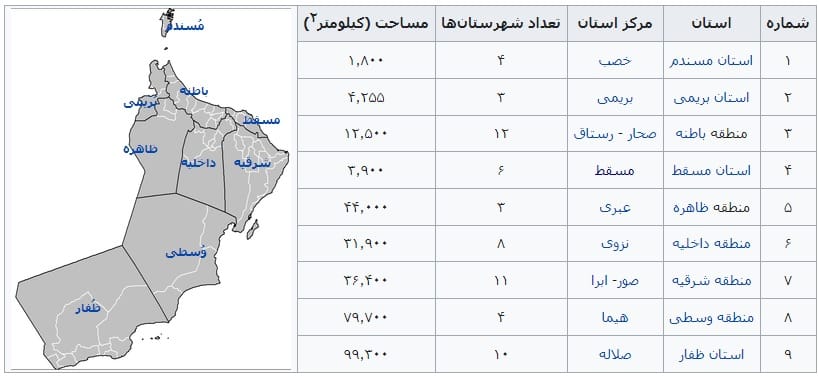
- Muscat: The capital governorate and a principal centre for public services, business and urban life.
- Dhofar: The southern governorate, known for Salalah and its distinctive khareef season.
- Musandam: The northern governorate near the Strait of Hormuz, geographically separated from the main part of Oman.
- Al Buraimi: A governorate in northwestern Oman.
- North Al Batinah: A northern coastal governorate that includes Sohar.
- South Al Batinah: A coastal governorate forming part of Oman's northern administrative region.
- Al Dakhiliyah: An inland governorate that includes Nizwa, a well-known historic city.
- Al Dhahirah: A governorate in western Oman.
- North Al Sharqiyah: An administrative region in the northeastern interior.
- South Al Sharqiyah: A governorate in the eastern part of the country.
- Al Wusta: A central governorate characterised by extensive inland and coastal areas.
Administrative names and boundaries should be checked against the current government listing when preparing detailed reports or datasets. For example, the official governorate and wilayat dataset is a useful starting point for verifying administrative terminology.
Oman's climate: what changes from region to region?
Much of Oman experiences hot summers and milder winters, but climate conditions differ between coastal settlements, mountain areas, the interior and the south. The timing of a trip should therefore be based on the specific destination rather than a single national average.
In Muscat and other northern coastal areas, summer heat can combine with high humidity. Inland desert environments can have more pronounced differences between daytime and night-time temperatures, while higher elevations have their own local conditions.
Dhofar is particularly notable for the khareef, a seasonal period when mist and rainfall can change the appearance of the landscape. The regional climate overview helps explain why southern Oman can offer a different seasonal experience from the north.
Dust and reduced visibility may affect some areas at certain times. Before travelling, check the forecast for the exact destination, particularly if the itinerary includes mountain roads, desert excursions or outdoor activities during the hottest part of the day.
Population, language and urban centres
Oman's population changes over time, so any published figure should include its extraction date and a clear definition of the population being counted. The country's official population clock is a practical place to obtain a current figure. It displays population information based on Royal Oman Police records.
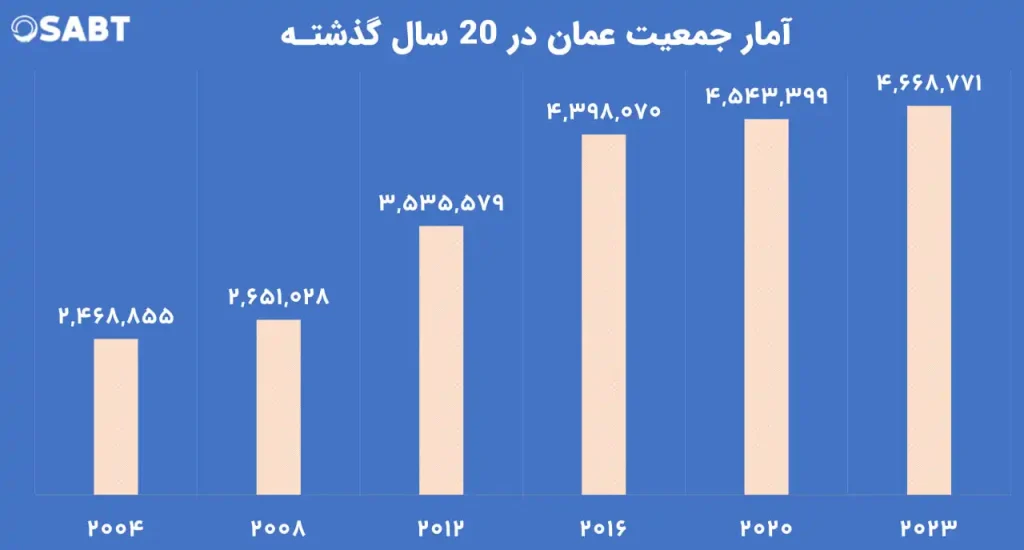
National population figures should not be confused with estimates for Muscat or another individual governorate. Differences in geographic boundaries and statistical definitions can make figures unsuitable for direct comparison unless the underlying data are aligned.
Arabic is Oman's official language. English is also used in parts of business, tourism and communication between people with different language backgrounds. Muscat is a key urban centre, while other cities serve regional, administrative, industrial and tourism needs.
Plants, wildlife and protected natural areas
Vegetation in Oman depends on rainfall, elevation, soil and access to water. Dry regions support plants adapted to limited moisture, while some agricultural areas rely on traditional irrigation systems known as aflaj.
Oman's aflaj irrigation systems are an important part of the country's cultural and technical heritage. The systems were inscribed on the UNESCO World Heritage List in 2006. Their channels and methods of water distribution differ, reflecting local conditions and established practices. The UNESCO record on Oman's aflaj provides further context.
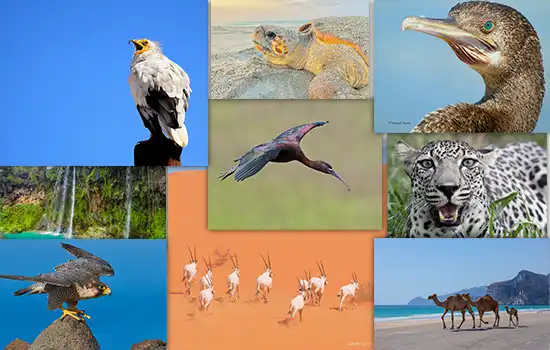
The country's habitats include mountains, deserts, coastal ecosystems and marine environments. Arabian oryx, Arabian gazelles and wild goats are among the animals associated with the region. Protected areas help conserve important habitats and species, although protection status and distribution differ by species and location.
The Environment Authority's information on Oman's natural reserves is a useful reference when planning visits to protected environments. Follow local access rules and avoid disturbing wildlife or leaving established routes where restrictions apply.
Best time to visit Oman
The best time to visit Oman depends on where you are going and what you want to do. The cooler months are generally more comfortable for outdoor sightseeing in Muscat and much of northern Oman, while Dhofar attracts visitors during its distinctive khareef season.

- Muscat and northern Oman: Consider the cooler part of the year for walking tours, sightseeing and other activities that involve extended time outdoors.
- Dhofar and Salalah: Consider the khareef season if your priority is seasonal greenery, mist and rain-influenced scenery.
- Mountain and desert trips: Plan around local temperatures, road conditions and the demands of the activity. During hot periods, avoid prolonged exertion in the middle of the day.
- Marine activities: Check sea conditions, operator arrangements and the suitability of the location for your experience level before booking.
Weather patterns vary between years. Check a current forecast and local travel advice shortly before departure rather than relying solely on typical seasonal conditions.
Places to visit: from Muscat to Dhofar
Oman's travel appeal comes from the combination of urban heritage, coastal scenery, mountain landscapes and seasonal natural attractions. A practical itinerary should group destinations by region to reduce unnecessary driving and account for local conditions.
Muscat and northern Oman
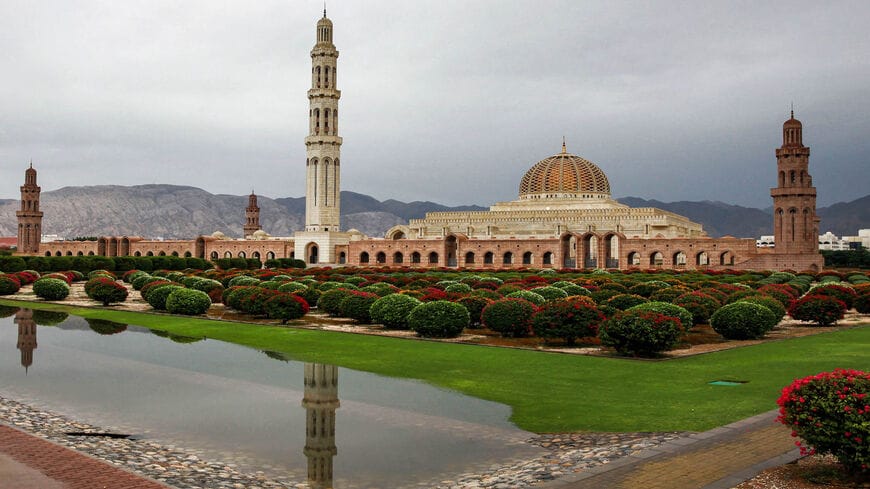
Muscat offers a mix of urban attractions and cultural landmarks. The Sultan Qaboos Grand Mosque is one of the country's prominent religious and architectural sites. Before visiting any religious or public venue, check its current visitor arrangements and access requirements.
North Al Batinah includes Sohar, while inland Al Dakhiliyah includes Nizwa, a recognised historic destination. These places offer different perspectives on the country's urban, coastal and inland geography.
Salalah and the southern coast
Salalah is a useful base for exploring Dhofar, particularly for visitors interested in the region's seasonal landscapes. Coastal areas around the city offer a different setting from the mountains and inland environments. Check local access and weather conditions before committing to a specific excursion.
Historic sites and outdoor experiences
Oman's forts and historic buildings form part of its architectural heritage. The UNESCO record for the Arabian Oryx Sanctuary is also relevant to understanding the country's conservation history; the site was removed from the World Heritage List in 2007, which should not be confused with the current national protection status of the species.
For diving, boating and other marine activities, choose an operator appropriate to the activity and your experience. Confirm sea conditions, safety arrangements and access rules before departure. Hotel properties and managed attractions may have their own visitor policies, so do not assume that every venue is open for unrestricted public visits.
Planning a visit around Oman's geography
Geography affects more than the appearance of a destination. Distances, terrain, temperature and seasonal weather all influence how much you can comfortably fit into a trip. Allow enough time for intercity journeys and check road conditions when travelling through mountain or desert areas.
- Choose the region first, then check the seasonal forecast for your travel dates.
- Allow additional time for long drives between northern Oman, the interior and Dhofar.
- For mountain, desert and marine activities, check route access and operator safety arrangements.
- Use official information for current administrative names and population figures.
- For travel or residence decisions, assess entry, employment and residence requirements separately; geography alone does not determine eligibility.






Comments & experiences
Share a useful experience or ask a relevant question.