


Oman ranked third worldwide and first in Asia in the mid-year 2026 Quality of Life Index, according to the Omani Ministry of Foreign Affairs announcement. The result places the Sultanate among the highest-ranked countries in this assessment, which combines several indicators related to everyday living conditions.
For people considering a move to Oman, the ranking offers a useful starting point for comparing destinations. It should be read alongside personal priorities such as employment, housing, healthcare access, climate and the cost of maintaining a particular lifestyle.
Oman's quality of life ranking in 2026
Oman ranked third globally and first in Asia in the mid-year 2026 assessment. The 2026 global quality of life table provides the country-level comparison, while the regional table shows how Oman compares with other Asian destinations.
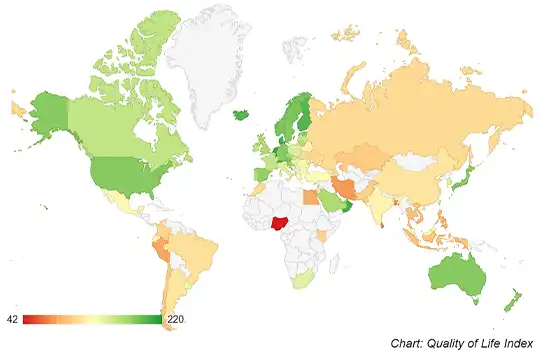
The Ministry of Foreign Affairs also reported that Oman ranked first in the Arab world. These positions reflect the index's combined indicators rather than a guarantee that every resident will experience the same standard of living.
What the quality of life index measures
Numbeo's Quality of Life Index combines several measures to compare living conditions across countries. Its quality of life methodology explains the factors used to construct the index.
- Purchasing power: an indicator of how local purchasing power compares across locations.
- Safety: a measure related to perceived safety.
- Healthcare: an assessment of healthcare-related conditions.
- Cost of living: a comparison of everyday expenses.
- Property price-to-income ratio: an indicator of housing affordability relative to income.
- Commute time: a measure related to travel time and commuting.
- Pollution: an indicator of environmental conditions.
- Climate: a measure reflecting climate-related conditions.
The overall score combines these dimensions. A strong result therefore does not mean that Oman is the cheapest destination, that every healthcare service is equally accessible, or that housing is affordable for every income level.
Why Oman stands out in the regional comparison
Oman's first-place position in Asia reflects its overall result across the index's combined measures. To understand the ranking in practical terms, prospective residents should examine the factors that matter most to their own circumstances rather than relying on the headline position alone.
Safety and everyday living
Safety is one of the indicators included in the index. People planning a move should also consider their intended neighbourhood, daily commute, family requirements and access to the services they expect to use.
Purchasing power and living expenses
The index considers purchasing power alongside the cost of living. These measures are not interchangeable: everyday expenses may be manageable for one household but difficult for another, depending on income, housing arrangements, family size and spending habits.

Oman's currency is the Omani rial (OMR). When preparing a relocation budget, calculate expected income and expenses in the currency in which they will actually be paid, and account for housing, transport, healthcare and family costs separately.
Healthcare and environmental conditions
Healthcare, pollution and climate also contribute to the index. Anyone considering a long-term move should assess the healthcare services available for their circumstances and whether Oman's climate and local environmental conditions suit their household.
How to use the ranking when planning a move to Oman
A country-level index can help narrow a shortlist, but it cannot replace a personal cost assessment. Before making a relocation decision, compare the following factors against your own needs.
- Estimate household expenses. Build a monthly budget that includes accommodation, utilities, transport, groceries, healthcare and education where relevant.
- Assess income and purchasing power. Compare expected take-home income with realistic expenses rather than relying on a national index score.
- Choose a suitable location. Consider the commute, available amenities, family needs and access to work or education.
- Review healthcare arrangements. Check which services are accessible to you and what your insurance or employment arrangements cover.
- Consider climate and daily routines. Evaluate the seasonal conditions, transport options and lifestyle changes that a move would involve.
- Check immigration and employment requirements separately. A high quality-of-life ranking does not itself establish eligibility for residence, a work permit or any other immigration status.
What the ranking does not tell you
The Quality of Life Index is a comparative indicator, not an individual affordability calculation or a promise of a particular living standard. Results can change between reporting periods, so the assessment date matters when comparing rankings.
Numbeo's index should also be considered alongside other relevant information. Your salary, employer benefits, housing costs, household composition and preferred location can have a greater effect on your day-to-day experience than the country's overall position.






Comments & experiences
Share a useful experience or ask a relevant question.