


Oman's seaports connect the Sultanate to international shipping routes and support a range of commercial activities, including container transport, industrial supply chains, bulk cargo and maritime tourism. The right port depends on the type of cargo, the vessel's route, the terminal facilities required and the location of the receiving warehouse or industrial site.
In 2025, Oman's ports handled more than 143 million tonnes of cargo and over 5.1 million twenty-foot equivalent units (TEU). These are national totals rather than figures for an individual port, so they should not be used to rank ports without comparable port-level data. The Ministry of Transport, Communications and Information Technology publishes the 2025 port performance figures.
Which port in Oman is best for your cargo?
Duqm, Sohar and Salalah are important options for commercial shipping, but their operational profiles differ. Duqm accommodates varied cargo types and is connected to a major economic zone, Sohar combines port operations with industrial and commercial activity, and Salalah has an established role in container and general cargo handling. Port Sultan Qaboos and Khasab serve different needs, particularly maritime tourism and regional activity.
| Port | Location | Main role | What to assess |
|---|---|---|---|
| Port of Duqm | Al Wusta Governorate | Multipurpose cargo and industrial logistics | Terminal suitability, cargo type and proximity to the intended industrial or storage site |
| Port of Sohar | Northern Oman | Industrial, commercial and container operations | Connections to production facilities, warehousing and shipping services |
| Port of Salalah | Southern Oman | Container handling, general cargo and maritime tourism | Shipping route, terminal availability and the distinction between capacity and actual throughput |
| Port Sultan Qaboos | Muscat | Primarily maritime tourism, with some commercial and marine services | Current permitted use and suitability for the specific vessel or service |
| Port of Khasab | Musandam Governorate | Regional trade and maritime tourism | Available facilities and current operating arrangements |
Port of Duqm: multipurpose cargo and industrial logistics
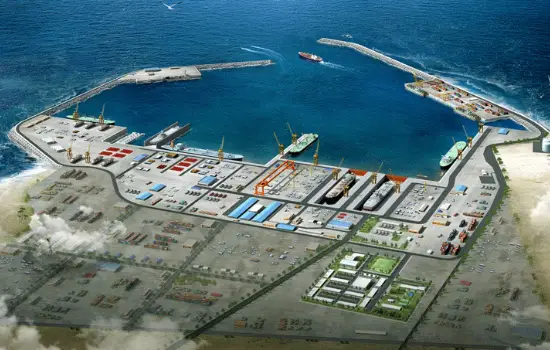
The Port of Duqm is located in Al Wusta Governorate within the wider Special Economic Zone at Duqm. Its multipurpose facilities accommodate dry and liquid bulk, general cargo, project cargo, packaged goods, containers and roll-on/roll-off vehicles. This range makes the port relevant to businesses that need to match a particular cargo profile with suitable terminal facilities.
Services listed by the port operator include cargo handling, yard operations, storage and refrigerated-container management. The stated annual capacity of the dry bulk terminal is approximately five million tonnes. That figure applies to the dry bulk terminal, not to the entire port. Businesses should distinguish terminal capacity from actual cargo throughput in a given year.
Duqm also provides ship-related services such as pilotage, tug assistance and berthing support. The operator describes these in its information on marine services at Duqm. Before selecting the port, importers, exporters and project contractors should check whether the required cargo type, handling equipment and vessel services are available for their planned operation.
Port of Sohar: industrial and commercial shipping

The Port of Sohar is on Oman's northern coast, approximately 220 kilometres from Muscat. The port and its associated free zone form a major industrial and logistics hub, linking maritime transport with manufacturing, trade and cargo operations.
Sohar is particularly relevant to businesses whose supply chains depend on connections between factories, storage facilities and shipping services. Its industrial setting can be useful when evaluating where to locate an operation, but the suitability of the port depends on the company's actual cargo, infrastructure and logistics requirements.
Port-related services include vessel information, shipping and agency services, port and marine operations, and freight transport. The precise service arrangement should be checked against the needs of the shipment rather than assumed from the port's general industrial profile.
Port Sultan Qaboos: Muscat's maritime tourism port

Port Sultan Qaboos is in Muscat and is now used primarily for maritime tourism, although some commercial activities and marine services are also associated with it. Commercial port operations were transferred to Sohar in 2011, and Sultan Qaboos subsequently shifted towards a tourism-focused role. The Ministry of Transport, Communications and Information Technology describes its current port-use arrangements.
This distinction matters when planning a commercial shipment. Historical descriptions of Sultan Qaboos as a major cargo port should not be treated as evidence that it currently offers the same commercial capacity or services as Sohar, Duqm or Salalah.
For cruise-related operations, marine services or a proposed vessel call, verify the current facilities and operating arrangements for the specific activity. Do not assume that general port infrastructure automatically means a particular cargo-handling service is available.
Port of Salalah: container handling and international shipping
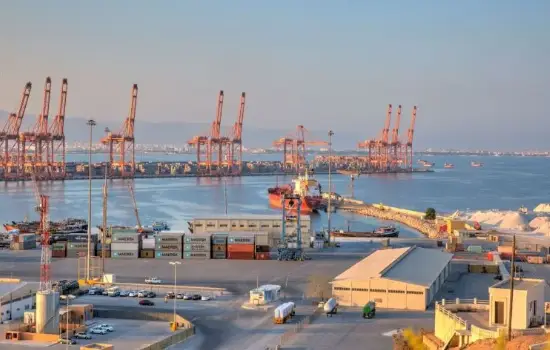
The Port of Salalah lies on major shipping routes between East and West and is an important location for container handling and general cargo. Maritime tourism is also part of its activity. For businesses choosing a port, its shipping connections and the availability of the required terminal services are central considerations.
Salalah began operations in 1998. When comparing its present performance with other Omani ports, use operating statistics for the same reporting period and the same measurement. Container capacity, measured in TEU, is not the same as the number of containers handled during a year. Similarly, cargo capacity should not be presented as actual annual throughput.
For a national comparison, the Ministry's 2025 figures provide useful context. During the first half of 2025, the reported combined cargo volume for Salalah, Sohar and Duqm was 70,114,527 tonnes, with 2,427,195 TEU handled across those ports. These figures cover that specific six-month period and those three ports; they are not annual totals for Salalah alone. See the Ministry's first-half 2025 port statistics.
Port of Khasab: regional trade and maritime tourism
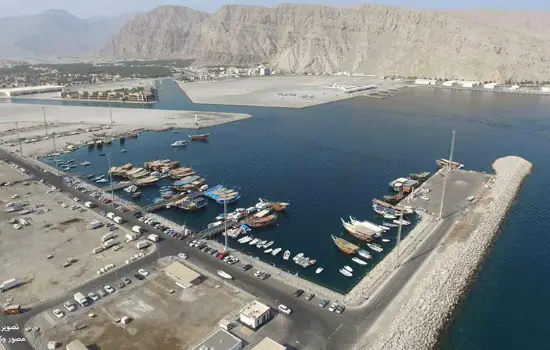
The Port of Khasab is in Musandam Governorate, close to the Strait of Hormuz. Its role includes regional trade and maritime tourism, making its location relevant to regional sea connections and tourism-related vessel activity.
Port development plans should be assessed against the latest official announcements and the operator's current information. The Ministry has announced a framework agreement with Hutchison Sohar concerning the management, operation and development of Khasab Port. A framework agreement should not be treated as proof that every proposed project has been completed or that all planned operations have commenced. The Ministry's Khasab port development announcement provides the relevant context.
How to choose an Omani port for imports and exports
Port selection should start with the physical and operational requirements of the shipment, then move to the supply chain and the total logistics arrangement. A port that is suitable for one cargo type may not be the right choice for another.
- Define the cargo. Identify whether the shipment consists of containers, dry or liquid bulk, general cargo, project equipment or vehicles.
- Check terminal compatibility. Confirm that the port accepts the cargo type and has the handling, storage or specialised services required.
- Map the shipping route. Consider the vessel's route and the practical connection between the port, the supplier and the final destination.
- Assess inland logistics. Compare access to the intended factory, warehouse or distribution location and the transport services needed after unloading.
- Request a shipment-specific quotation. Port charges and transport costs depend on the services used, cargo characteristics and shipping arrangement. Obtain current quotations rather than relying on a general port ranking.
Businesses planning an industrial or logistics operation in Oman should also distinguish the choice of port from the choice of business location. A port's proximity to an economic zone or industrial area may be useful, but the relevant business activity, infrastructure needs and applicable licensing arrangements must be assessed separately.
Frequently asked questions about Oman's seaports
Get guidance on establishing a business in Oman
Choosing a port is one part of a wider commercial decision. If you are planning an industrial, trading or logistics business in Oman, Connsect can help you assess the company-registration process and the services relevant to your proposed activity.
Explore company registration in Oman or request a free initial consultation.





Comments & experiences
Share a useful experience or ask a relevant question.