

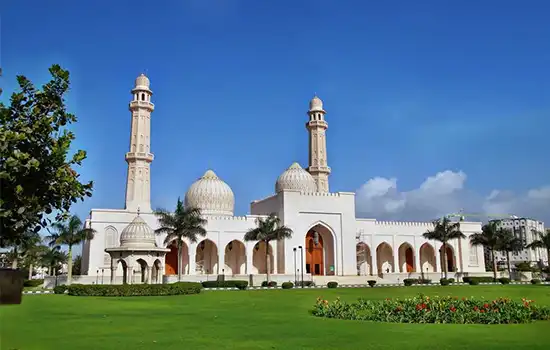
Sultan Qaboos Grand Mosque is one of Muscat’s most recognisable religious and architectural landmarks. Opened in 2001, the complex combines Islamic architectural traditions with distinctive interior details, including a prominent central chandelier and a large handwoven Persian carpet. The entire complex has a reported capacity of approximately 20,000 people. Official visitor information is the best starting point for planning your visit.
What makes Sultan Qaboos Grand Mosque distinctive?
The mosque brings together geometric design, calligraphy, decorative craftsmanship and monumental interior spaces. Its architecture draws on a range of Islamic artistic traditions, so the complex is best understood as an example of Islamic architecture rather than the work of a single national tradition.
Two features stand out inside the main prayer hall: the chandelier beneath the central dome and the large Persian carpet. Together, they create a striking interior in which architectural scale and detailed craftsmanship are equally important.
The central chandelier and main prayer hall
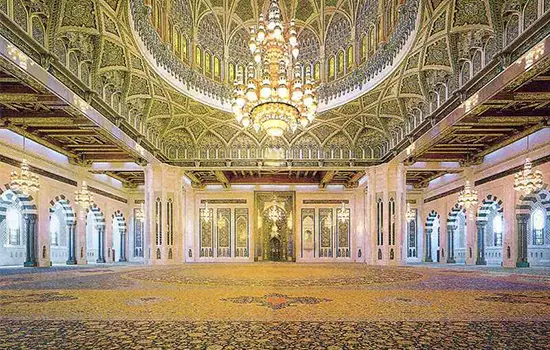
The prominent chandelier hangs beneath the central dome of the main prayer hall. Its position makes it one of the most noticeable elements of the interior, complementing the dome and the hall’s decorative details.
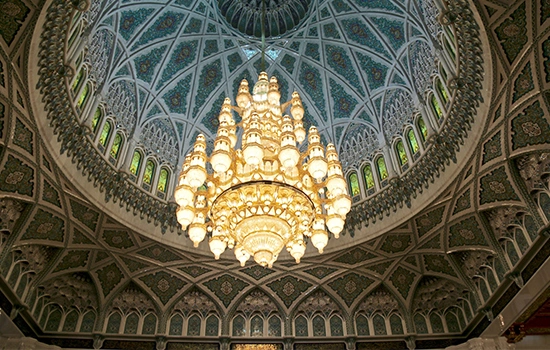
The mosque’s interior is designed as a coordinated architectural space rather than a collection of isolated decorative objects. When viewing the chandeliers, look at how they relate to the dome, the prayer hall and the surrounding ornamentation.
The main prayer hall is part of a larger complex whose overall capacity is reported at around 20,000 people. This figure refers to the complex as a whole, not necessarily to the main prayer hall alone. Architectural information about the mosque provides further context for its design and interior features.
The Persian carpet: Iranian craftsmanship in Oman
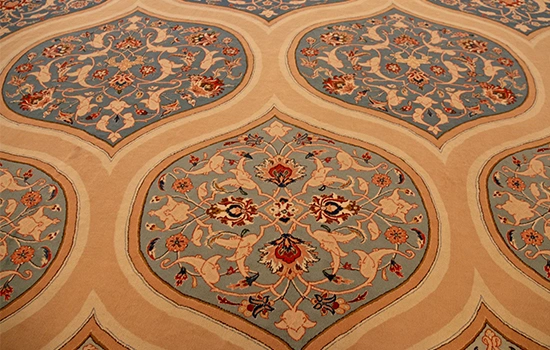
The large handwoven carpet in the main prayer hall is one of the mosque’s most distinctive artistic features. Its design connects Iranian carpet-making traditions with the architectural setting of the mosque.
According to Iran Carpet Company, the carpet was designed in Tehran and woven in dedicated workshops in Nishapur. Its decorative vocabulary includes traditional motifs associated with Iranian carpet-making centres such as Isfahan, Kashan and Tabriz. The company also identifies the dome of Isfahan’s Sheikh Lotfollah Mosque as an inspiration for the carpet’s design. Iran Carpet Company’s account of the carpet provides additional background on its design and production.
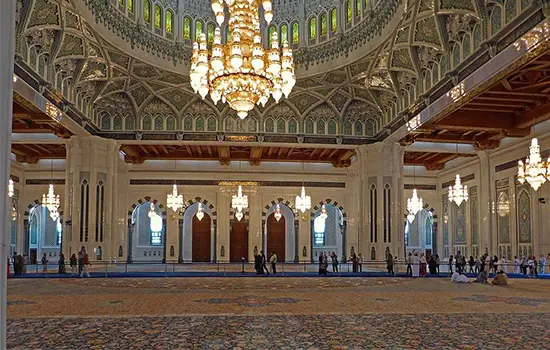
When viewing the carpet, notice the combination of intricate floral and Islamic ornamental patterns. These details illustrate how a textile can contribute to the character of a monumental religious interior, not simply cover its floor.
Visiting the mosque: opening hours and entry
Non-Muslim visitors are accommodated during designated visiting hours. The official Oman tourism guide lists a morning visiting window from Saturday to Thursday, between 8:00 and 11:00 a.m. Schedules and access arrangements can change, so check the official visitor guide before setting out.
The same tourism guide lists an entry fee of 8 Omani rials. Confirm the current tariff and ticket conditions before your visit, particularly if you are planning around a group itinerary or a fixed travel budget.
For directions, use the map below to locate the mosque in Muscat. Check the current visitor arrangements before travelling, rather than assuming that access is available throughout the day.
Dress code and visitor etiquette
Sultan Qaboos Grand Mosque is an active place of worship, so visitors should dress modestly and follow the instructions displayed at the complex. Clothing should cover the shoulders and knees, and women should cover their hair. The official tourism guide also refers to abayas and head coverings being available at the entrance; bringing suitable clothing is still the more practical option.
- Remove your shoes before entering the prayer hall.
- Keep noise to a minimum and avoid disturbing worshippers.
- Respect other visitors’ privacy when taking photographs.
- Follow signs and staff instructions about access to specific areas.
- Avoid eating or drinking inside the prayer hall.
Rules may differ between areas of the complex. Follow the instructions given on site instead of assuming that every space has identical access or photography conditions.
What to look for inside the prayer hall
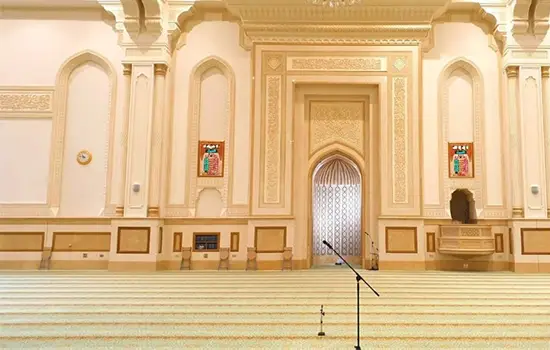
The main prayer hall brings together the central dome, chandelier and detailed decorative finishes in one space. The carpet adds another layer of craftsmanship, linking the building’s interior design with the tradition of Iranian handwoven textiles.
The wider complex also includes cultural and supporting facilities. For information about access to the library or other adjoining areas, ask the mosque’s staff and follow the current visitor arrangements.






Comments & experiences
Share a useful experience or ask a relevant question.