

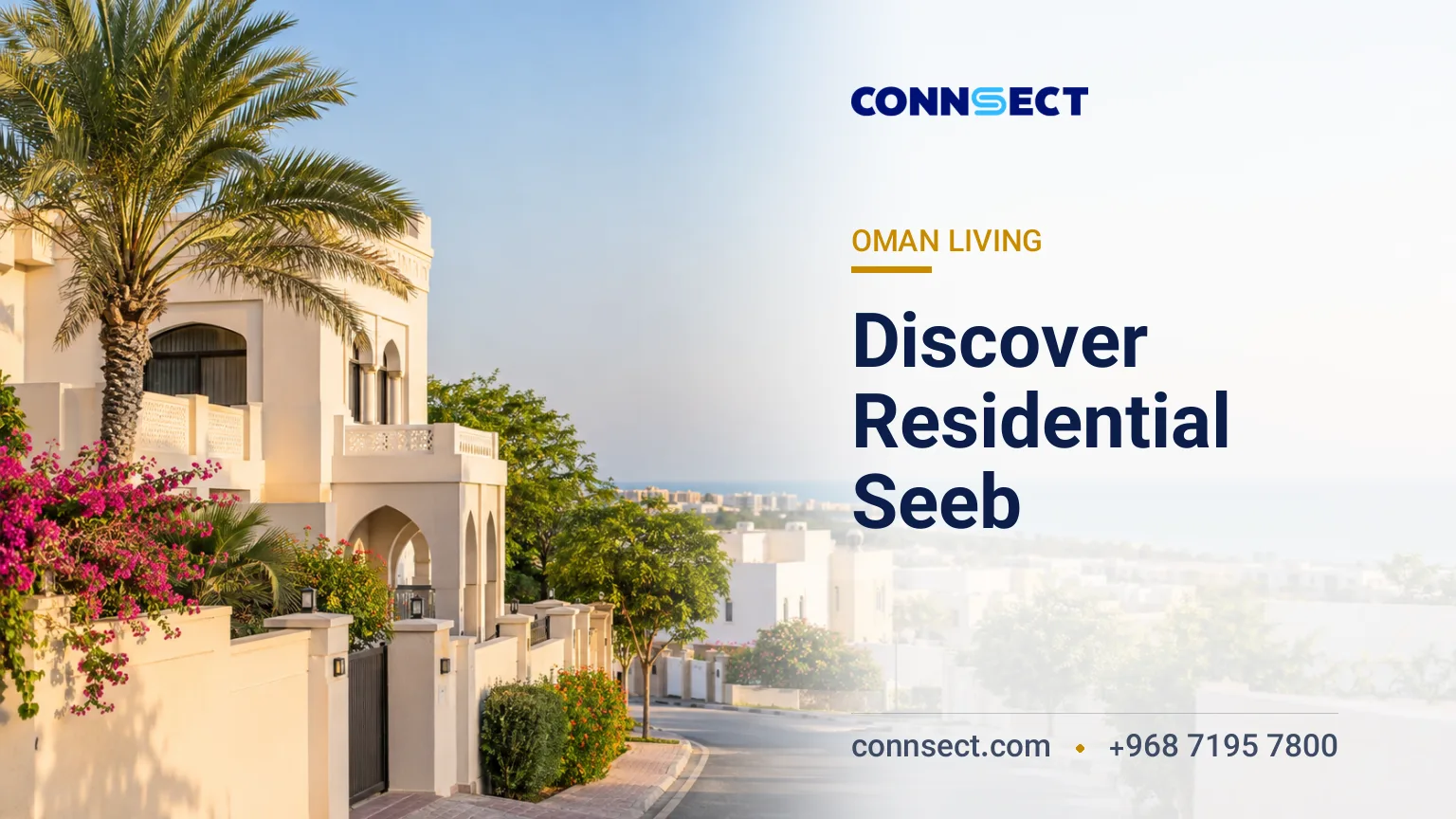
Living in Seeb, Oman, can suit expatriates who want residential options within Muscat Governorate, access to everyday services and connections to the international airport and other parts of the capital. Seeb is not a single neighbourhood but a large wilayat with distinct residential areas, including Al Khoudh, Al Mawaleh, Al Mabelah and Al Hail. The right choice depends less on the area's name than on where you work, whether you have a car, your household's healthcare and education needs, and how often you travel across Muscat.
Seeb at a glance
- Seeb is one of the six wilayats of Muscat Governorate, west of Bawshar along the Gulf of Oman.
- Al Khoudh, Al Mawaleh, Al Mabelah and Al Hail are useful starting points for a residential search.
- Public healthcare facilities include Al Seeb Health Centre and Al Seeb Polyclinic.
- Mwasalat route A1 connects Al Mabelah with Muscat International Airport and Ruwi.
- Sultan Qaboos University and its university hospital are important destinations around Al Khoudh.
- Foreign property ownership is subject to specific legal conditions; not every residential property in Seeb is available for purchase by non-Omanis.
Understanding Seeb as a residential location
Seeb lies in the western part of Muscat Governorate and combines coastal settlements, established residential neighbourhoods and newer urban developments. The Muscat Municipal Council describes the wilayat as having approximately 50 kilometres of coastline and 24 villages and townships. Its geographical size matters when choosing accommodation: two properties advertised as being in Seeb may have very different access to workplaces, shopping facilities and public transport.
For an expatriate household, the practical question is not simply whether Seeb is a good place to live. It is whether a particular part of Seeb makes everyday routines manageable. A home close to a university may be convenient for academic staff but less suitable for someone commuting daily to another business district.
Seeb is worth considering if you want access to Muscat's urban facilities while comparing residential options outside the more central districts. Its airport connections are also relevant for people who travel frequently. Check the exact property location rather than relying on general descriptions of the wilayat.
The Muscat Municipal Council's Seeb profile provides geographical and administrative context for the area.
Which residents should consider Seeb?
Seeb can be practical for families, university-related households, employees and frequent travellers. Its suitability depends on the relationship between the property, daily destinations and available transport.
Families relocating to Muscat
Families should prioritise school journeys, healthcare access, grocery shopping and the practical layout of the property. Parking, bedroom arrangements, building maintenance and the route between home and school can affect daily life more than the general reputation of a neighbourhood.
Identify suitable schools before committing to a residential area. Compare their locations with the actual property address, and check the journey during school arrival and collection times. Families with young children should also consider nearby nurseries and the availability of suitable medical services.
Professionals and single residents
For professionals, commuting time and access to workplaces should guide the decision. A smaller apartment with convenient road access or a suitable bus connection may be more practical than a larger property that adds substantial travel time to every working day.
Check parking arrangements, nearby supermarkets, pharmacies and food outlets. If your work involves frequent travel to central Muscat, test the journey during normal commuting hours before signing a tenancy agreement.
Students and university employees
Al Khoudh deserves particular attention for people connected with Sultan Qaboos University. The university and Sultan Qaboos University Hospital are important destinations in this part of Seeb, making the surrounding area relevant to students, academic employees and associated households.
Do not assume that every property advertised in Al Khoudh is close to the university entrance. Check the exact building location, access road and journey time to your department or workplace.
Comparing Seeb's residential neighbourhoods
Al Khoudh, Al Mawaleh, Al Mabelah and Al Hail are useful areas to compare when looking for accommodation in Seeb. Each should be assessed against your actual destinations rather than treated as a fixed ranking of the best places to live.
Al Khoudh: access to the university area
Al Khoudh is a relevant starting point for university students, staff and households whose routines involve Sultan Qaboos University. Its location makes access to the university complex and associated facilities an important consideration.
When viewing a property, compare its distance from the university, nearby medical facilities, main roads and everyday shops. A property in the wider Al Khoudh area may still require a substantial drive to a particular campus building.
Al Mawaleh: shopping and commercial access
Al Mawaleh is worth considering if shopping and access to commercial facilities are priorities. City Centre Muscat is a significant retail, dining and entertainment destination in the wider area, making it relevant when comparing residential locations.
However, proximity should be assessed using the property's exact address. A short distance on a map does not necessarily mean convenient walking access. Check nearby supermarkets, pharmacies and essential services as well as access to larger shopping centres.
Al Mabelah: public transport connections
Al Mabelah is particularly relevant for residents considering public transport. Mwasalat route A1 connects Al Mabelah with Muscat International Airport and Ruwi, while other services cover additional parts of the Muscat network.
This connection can be useful for employees and travellers whose destinations are close to the route. Before choosing a property, identify the nearest bus stop, walking distance, departure times and service frequency. A bus route serving Al Mabelah does not automatically make every residential building convenient for passengers without a car.
Al Hail: assess the exact residential location
Al Hail is another established name in Seeb's residential property market. Its suitability depends on the specific section, road access and distance to the services you use regularly.
Compare the northern and southern parts where relevant, and inspect the immediate surroundings of each property. Parking, access to main roads, nearby shops and the distance to your workplace should carry more weight than the neighbourhood label alone.
| Area | Main consideration | Potentially suitable residents |
|---|---|---|
| Al Khoudh | Access to the university area | Students and university-related households |
| Al Mawaleh | Shopping and commercial facilities | Families and working professionals |
| Al Mabelah | Public transport connections | Employees and frequent travellers |
| Al Hail | Residential setting and local access | Families and single residents |
Healthcare, shopping and everyday facilities
Everyday convenience depends on the facilities within practical reach of your home. Seeb has public healthcare facilities, private medical services and major retail destinations, but their usefulness depends on your exact residential location.
Healthcare facilities
Al Seeb Health Centre and Al Seeb Polyclinic are part of Oman's public healthcare network. Al Seeb Polyclinic is located in Al Khoudh 3, near Mazoon Jamei, and provides medical and paramedical services.
Sultan Qaboos University Hospital is another important healthcare destination associated with the university complex. Private healthcare is also available through providers such as Numa Health Medical Centre in Wadi Al Lawami, which advertises outpatient consultations, laboratory services, radiology and pharmacy facilities.
Before renting, identify the nearest facility that can handle your household's actual medical needs. Check appointment arrangements, insurance acceptance, available specialties and opening hours directly with the provider. A nearby general health centre should not be assumed to offer every specialist service.
Useful facility details are available through the Ministry of Health's Al Seeb Health Centre listing, the Al Seeb Polyclinic directory and Sultan Qaboos University Hospital.
Shopping and daily essentials
City Centre Muscat offers retail stores, restaurants and entertainment facilities and is a useful destination for residents in the wider Seeb area. Its official directory can help you check the available shops and dining options.
For everyday living, however, convenience often comes from smaller facilities near home. Check the distance to grocery shops, pharmacies, laundry services and other essentials. Residents without a car should pay particular attention to pedestrian access and safe road crossings.
Schools and childcare
Families planning a longer stay should establish their education requirements before choosing a home. Curriculum, language of instruction, admission requirements, school transport and daily travel time all influence the best residential location.
Shortlist suitable schools and nurseries first, then compare properties around those destinations. For younger children, also consider opening hours and whether childcare arrangements fit the parents' working schedules.
Getting around Seeb, Muscat and the airport
Seeb is connected to other parts of Muscat through the road network and Mwasalat's public bus services. Your transport options will depend on your residential address, destination and daily schedule.
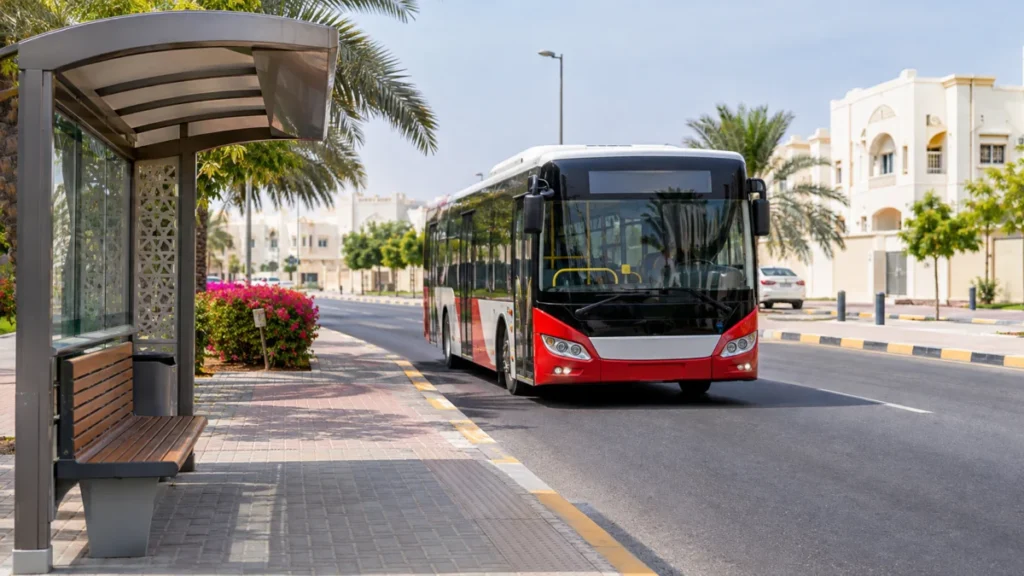
Route A1 connects Al Mabelah with Muscat International Airport and Ruwi. Route 1 links Ruwi Bus Station with Al Mabelah Bus Station, while route 7 connects Mabelah Bus Station with Seeb Park. These routes provide useful reference points when comparing properties.
Use the Mwasalat route directory to check stops and current services. Review the timetable for the day and time you intend to travel rather than assuming that a published route operates at the frequency you need.
Muscat International Airport also provides access to Mwasalat buses. The airport bus station is on the ground floor outside the terminal building, and car rental facilities are available. The airport's transport information is useful when planning arrivals, departures and onward travel.
If you intend to commute by car, test the route to work during peak periods. If you plan to rely on buses, check the walking distance from the property to the stop and whether the service matches your working hours.
A practical property-selection process
A good residential decision starts with your daily routine, not a property advertisement. Use the following sequence to compare locations consistently.
- Map your regular destinations. Record your workplace, school, university, healthcare provider and other places you visit frequently.
- Set your household requirements. Decide on the number of bedrooms, parking needs, building facilities and accessibility requirements.
- Shortlist suitable areas. Compare Al Khoudh, Al Mawaleh, Al Mabelah and Al Hail against your destinations.
- Test transport access. Check driving routes, bus stops, departure times and walking distances.
- Visit properties at different times. Assess traffic, noise, parking and activity around the building.
- Inspect the property itself. Check air conditioning, plumbing, water pressure, lifts, shared spaces and maintenance arrangements.
- Review the tenancy terms. Clarify rent, deposit, repair responsibilities, contract duration and renewal conditions before signing.
- Coordinate residency and accommodation arrangements. Make sure your housing arrangements are consistent with your personal residency circumstances and required documentation.
Renting or buying: what foreign residents need to know
Renting and purchasing property in Oman are different legal decisions. Renting allows a resident to assess a neighbourhood before making a long-term commitment, while buying requires additional checks on the property's legal status and the buyer's eligibility.
Under Oman's Integrated Tourism Complexes ownership framework, non-Omani individuals and legal entities may own property in licensed developments subject to the applicable rules. This is not a general permission to purchase any apartment, villa or plot in Seeb.
Before paying a deposit or signing a purchase agreement, verify the development's eligibility, the property's registration documents, the cadastral plan and any applicable ownership restrictions. Certain geographical areas and property categories are subject to restrictions on non-Omani ownership.
The ownership framework also provides for a residence permit application for qualifying non-Omani property owners and their first-degree relatives, subject to implementing regulations and conditions. Buying an ordinary residential property should never be treated as an automatic route to Omani residency.
For the official application requirements, consult the government property ownership service and the Integrated Tourism Complexes ownership legislation.
Government charges and service timing
Gov.om publishes the following charges for its property ownership service in Integrated Tourism Complexes. These are administrative charges associated with that service, not a complete estimate of the cost of purchasing a property.
| Item | Published amount or time |
|---|---|
| Application submission through Amlak Platform | OMR 5 |
| Application form | OMR 25 |
| Title deed issuance | OMR 10 |
| Contract issuance | OMR 2 |
| Contract interest | 3% of the property value |
| Published service processing time | 2 days |
The two-day period relates to the published government service, not necessarily the entire property transaction. Legal checks, document corrections, payment arrangements and other transaction stages can affect the overall timetable.
Sultan Haitham City and Seeb's urban development
Sultan Haitham City is a major urban development project located in Wilayat Seeb. Its planning focuses on a sustainable urban environment, residential options for different groups, green spaces and integrated urban facilities.
For prospective residents and investors, the development is worth considering as part of a wider comparison of Seeb's residential options. However, distinguish planned facilities from services already operating. Before committing to a unit, check construction progress, handover arrangements, road access, available facilities and the legal ownership conditions of the specific property.
The Ministry of Housing and Urban Planning's project information provides the official development context.
Common mistakes when choosing accommodation in Seeb
Many avoidable housing problems arise when a decision is made using general neighbourhood descriptions instead of the actual property location. Check these points before paying a deposit.
- Treating Seeb as one neighbourhood: distances and access differ considerably across the wilayat.
- Choosing solely on rental price: a cheaper property may create higher commuting costs and longer journeys.
- Relying only on map distances: test the actual route at the time you will travel.
- Assuming public transport is convenient everywhere: check the nearest stop and current timetable.
- Overlooking healthcare requirements: identify a facility that can meet your household's specific medical needs.
- Skipping a physical inspection: check cooling, plumbing, parking and building maintenance.
- Assuming foreign ownership is unrestricted: verify the legal eligibility of the exact development and property.
- Confusing property ownership with guaranteed residency: residency eligibility depends on the applicable ownership framework and conditions.
Frequently asked questions about living in Seeb Oman
Choosing a home in Seeb with Connsect
The right property should support your actual routine, whether you are relocating for work, bringing your family to Oman or considering a longer-term investment. Connsect assists clients with residency guidance and property-related decisions from its offices in Muscat and Tehran.
Property purchase opportunities introduced through Connsect start from approximately OMR 40,000, depending on the property and development. Foreign buyers should have the project's eligibility and ownership conditions assessed before making a financial commitment.
For an initial assessment of your residential requirements, intended location and property options, use the Connsect consultation form. The first consultation is free.
When comparing Seeb neighbourhoods, start with your workplace, school or other regular destination. Then evaluate individual properties against transport, healthcare, shopping and legal requirements. This approach produces a more reliable residential decision than choosing a location based on an advertisement alone.




Comments & experiences
Share a useful experience or ask a relevant question.